

Saudi Arabia has opened its doors wider to foreign business than ever before, and the gateway to that opportunity has a name: the MISA License. If you're a foreign entrepreneur, SME owner, or multinational executive planning your entry into the Kingdom, understanding this single document is the difference between a smooth launch and months of avoidable delay. This guide breaks down everything a first-time applicant needs to know.
What Is a MISA License?
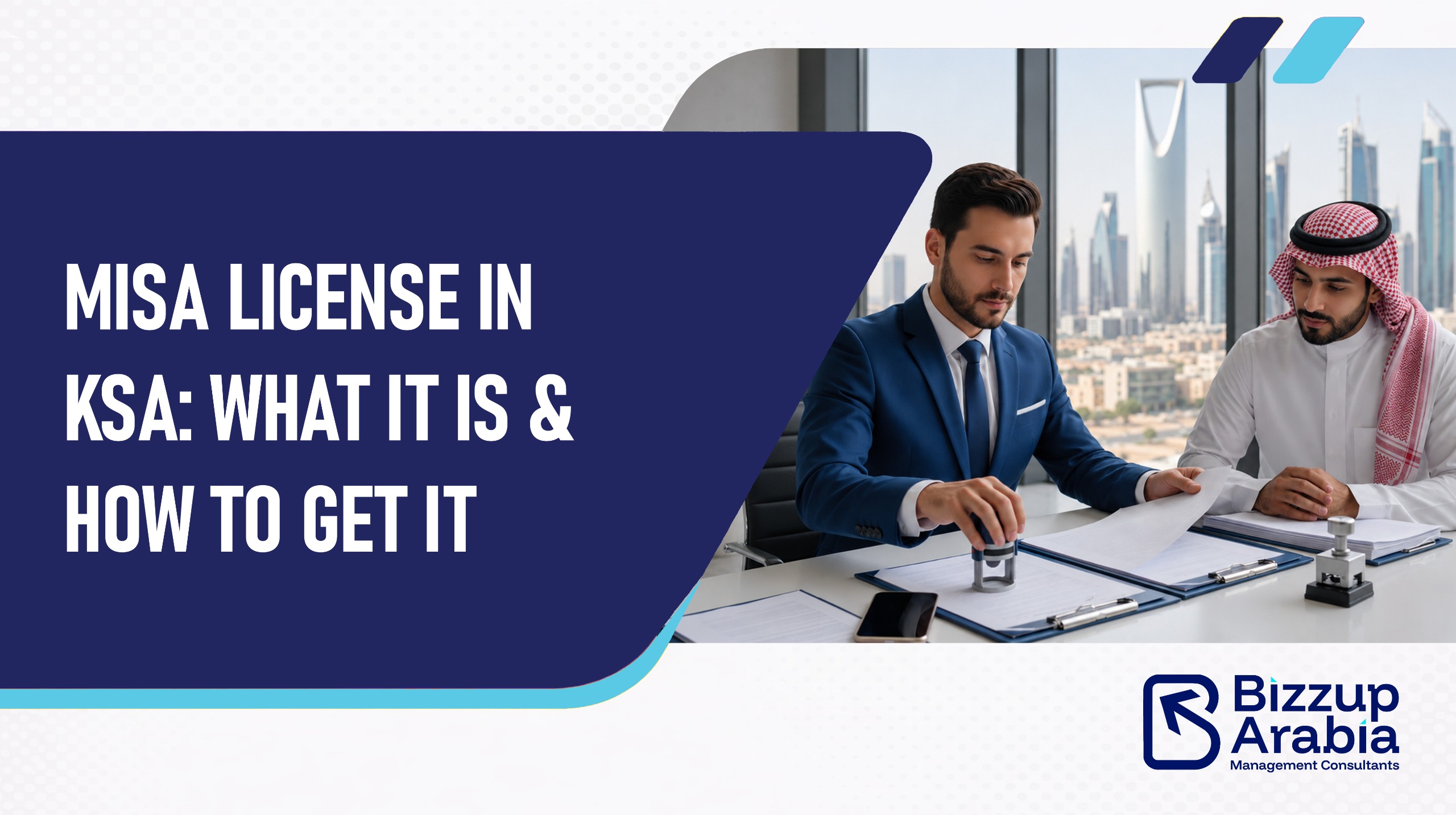
A MISA License Saudi Arabia is the official investment authorization issued by the Ministry of Investment of Saudi Arabia (MISA). In plain terms, it's the government's formal permission for a foreign individual or company to own and run a business inside the Kingdom. MISA formerly known as SAGIA, (the Saudi Arabian General Investment Authority), before its rebranding in 2020.
Saudi nationals register their businesses directly with the Ministry of Commerce. Foreign investors, by contrast, must first be vetted and approved by MISA before they can take that same step. The license confirms that your proposed business activity is open to foreign investment, that your company and its shareholders meet the Ministry's standards, and that you're cleared to move forward with full company formation in Saudi Arabia.
Since the SAGIA-to-MISA rebrand, the licensing process has shifted almost entirely online, with faster turnaround times and a far more investor-friendly experience than the system it replaced.
Why is a MISA License Important?
The MISA license is the legal basis for all foreign businesses in Saudi Arabia. Without a MISA, a foreign-owned entity cannot legally obtain commercial registration, open a corporate bank account, sponsor employee visas, sign binding contracts, or bid on government and private sector tenders in the country.
In a market that is rapidly diversifying away from its reliance on oil, MISA serves as a checkpoint that aligns foreign investment in Saudi Arabia with national development goals.
Types of MISA Licenses
-
Service License
For consulting, IT, marketing, education, and other service-based businesses. The most commonly issued license type for foreign SMEs and consultancies.
-
Trade/Commercial License
For wholesale, retail, distribution, and e-commerce operations. This is one of the more tightly regulated categories, sometimes with lower capital or local presence requirements. -
Industrial License
For manufacturing and production businesses. Often comes with access to industrial land and energy subsidies through the Saudi Industrial Development Fund (SIDF). -
Entrepreneurial License
Designed for startups supported by an accredited incubator or university program - typically faster and lighter on capital requirements. -
Regional Headquarters (RHQ) License
For multinational companies managing MENA-wide operations from Riyadh. Appointments and meeting operational milestones are required, but can carry significant tax benefits. -
Real Estate Investment License
For foreign investors purchasing or developing property in eligible areas of the country. -
Agricultural License
For investment in agriculture, agribusiness, and related production activities.
-
Branch License
Allows an existing foreign company to operate a branch in Saudi Arabia, with some restrictions on permitted activities, rather than incorporating a new local entity.
Key Benefits of Having a MISA License
Holding a valid license grants foreign businesses privileges, facilitating easier access to the Saudi market, the largest economy in the Arab world, and facilitating easy access to the wider GCC trade. MISA allows up to 100% foreign ownership in most sectors without a mandatory local sponsor or partner. It also provides full legal recognition under Saudi commercial law, allowing you to sign contracts, lease property, and operate with confidence.
MISA License Eligibility and Required Documents
Before applying for a MISA license, foreign investors must meet MISA's eligibility requirements. The business activity must be open to foreign investment and not fall under restricted sectors. Regulated industries such as banking, insurance, healthcare, telecommunications, and aviation may require additional approvals. While many activities allow 100% foreign ownership, some sectors have specific ownership or partnership requirements, so it's important to verify the applicable rules before applying.
Required Documents for MISA License
Preparing the required documents is often the most time-consuming stage of setting up a business in Saudi Arabia. In most cases, the delay comes from the document legalization and attestation process rather than the paperwork itself.
The documents generally required include:
- Commercial Registration (or the equivalent business registration certificate) of the parent company in the home country.
- Memorandum & Articles of Association: Parent company's constitutional documents.
- Audited Financial Statements: Latest fiscal year's audited accounts.
- Board Resolution: Approving the Saudi investment and authorized signatory.
- Power of Attorney (POA): For the local representative or General Manager.
- Passport Copies: All shareholders, directors, and proposed General Manager.
- Business Plan: Brief description of intended business activities.
- No-Objection Certificate (NOC): Required only if operating another entity in Saudi Arabia.
If any documents are issued outside Saudi Arabia, they must be notarized, legalized by the Saudi Embassy, attested by the Saudi Ministry of Foreign Affairs (MOFA), and translated into Arabic by a certified translator before submission. Since embassy legalization can take 2–4 weeks, it is best to start the process early to avoid delays.
How to Get a MISA License: Step-by-Step Process
How do I get a MISA license in Saudi Arabia? This is a common question asked by foreign investors. Here's how the process unfolds, from initial login to final approval.
Confirm Your Activity & Legal Structure
Determine the type of business you want to establish in Saudi Arabia before applying.
- Select the correct ISIC4 business activity code.
- Choose the appropriate legal structure (LLC, Branch Office, JSC, etc.).
- Confirm that your activity is open to foreign investment.
- Verify if your sector has any special ownership or licensing requirements.
Prepare & Legalize Documents
Gather all required documents before starting the application.
- Collect the parent company's legal documents.
- Notarize documents in the country of origin.
- Legalize them through the Saudi Embassy.
- Obtain MOFA attestation in Saudi Arabia.
- Translate all documents into Arabic using a certified translator.
Create a MISA e-Services Account
Register on the official MISA portal
- Register a new investor account.
- Verify your email address and mobile number.
Submit the Application
Complete the online investment license application.
- Provide company and shareholder details.
- Select the approved business activity.
- Upload all required supporting documents
Receive Your MISA License
Once your application is approved, MISA issues the Investment License.
- Receive the official Investment License (Registration Certificate).
- This authorizes you to establish your business in Saudi Arabia.
Complete Company Registration
Register your company with the relevant Saudi government authorities.
- Reserve your company trade name.
- Obtain your Commercial Registration (CR) from the Ministry of Commerce.
- Register with the Chamber of Commerce.
- Complete registrations with ZATCA and GOSI.
Costs, Fees, and Processing Time for MISA License
A MISA license is usually issued quickly, within 3 to 15 business days, depending on your sector and how clean your submission is. The document attestation itself can take two to four weeks, and sector-specific approvals can take longer. However, government services in Saudi Arabia are much easier to access than in the past.
Cost and Fees
The government fee for a MISA license varies depending on the type of license, the business activity, and whether you are applying for the first time or renewing.
Conclusion:
Foreign investment in Saudi Arabia is on the rise, and obtaining a MISA license is the gateway and most important step to establishing a successful business in the country. While the application process requires careful planning, document preparation, and compliance with regulatory requirements, the right guidance can make the journey simple and hassle-free. Saudi Arabia’s legal framework is more streamlined than ever before. Whether you’re launching a startup, expanding an international business, or establishing a local headquarters, obtaining your MISA license opens the door to one of the world’s fastest-growing investment destinations and positions your business for long-term success.
Why choose Bizzup Arabia?
At Bizzup Arabia, we simplify the entire MISA licensing and company formation process in Saudi Arabia, allowing you to focus on growing your business while we handle the legal and administrative complexities. Our team of 150+ local experts and Saudi business setup specialists provides full support - from selecting the right license and preparing documentation to obtaining approvals and completing company registration.
Why businesses trust Bizzup Arabia
- Complete end-to-end support - We handle the entire MISA licensing process from application to company incorporation.
- Experienced business setup consultants - Our experts understand Saudi regulations and ensure full compliance at every stage.
- Fast and hassle-free processing - We help reduce delays through accurate documentation and efficient application management.
- Transparent Pricing – No hidden costs, with clear guidance on government fees and service charges.
- Dedicated Client Assistance – Receive personalized support throughout your business setup journey.
- Comprehensive Business Services – Beyond MISA licensing, we assist with Commercial Registration (CR), PRO services, VAT registration, corporate banking, visa processing, accounting, and ongoing business compliance.