



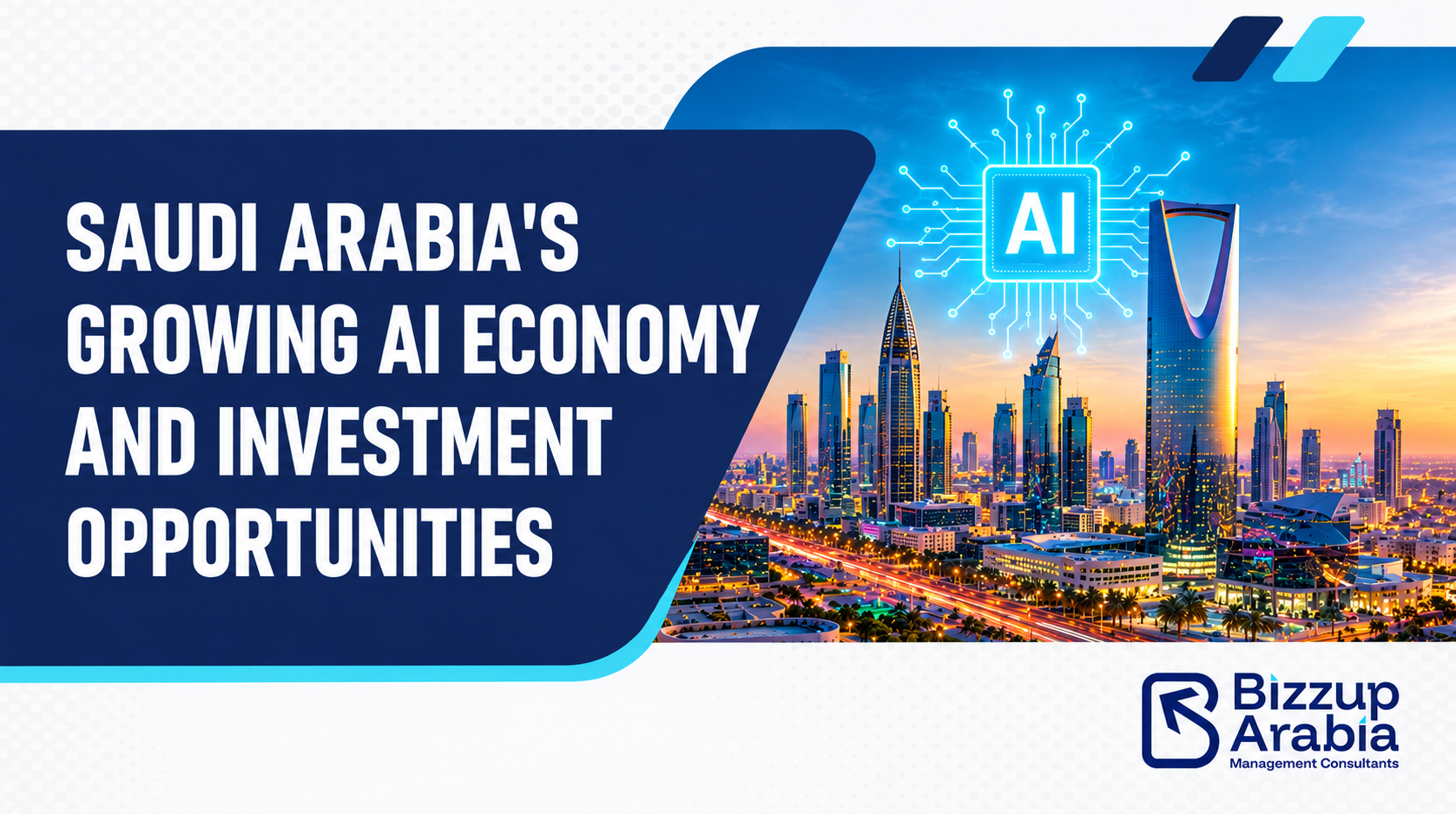
Saudi Arabia is entering a new chapter of economic transformation. For decades, oil and energy have been the backbone of the Kingdom’s economy. Today, Saudi Arabia is building a much broader economic base through technology, artificial intelligence, digital infrastructure, logistics, e-commerce, cybersecurity, financial technology, and other emerging industries. As part of Vision 2030, changes in the country’s economic sector are increasingly attracting businesses to Saudi Arabia. Artificial intelligence is increasingly becoming one of the most important pillars of this transformation.
The latest commercial registration figures from Saudi Arabia’s Ministry of Commerce show just how quickly the technology ecosystem is expanding. Commercial registrations for artificial intelligence activities increased by 31% to 24,552, making AI the fastest-growing activity among the highlighted promising sectors.
Why is Saudi Arabia investing heavily in AI?
Saudi Arabia’s AI development is closely linked to the country’s long-term economic transformation plan, Saudi Vision 2030. Vision 2030 aims to diversify the Saudi economy, develop new industries, increase private sector participation, create jobs, and strengthen the country’s global competitiveness.
Artificial intelligence is playing an increasingly important role in achieving these goals, with applications across almost every major economic sector. As businesses worldwide explore the opportunities created by AI, they are also looking for supportive and future-ready business environments. Saudi Arabia is strengthening its business ecosystem to meet these evolving needs and support innovation, investment, and sustainable growth.
Saudi Arabia’s AI Economy in 2026: Emerging Investment Opportunities Beyond Technology
Saudi Arabia is rapidly developing its artificial intelligence ecosystem as part of its broader digital transformation and economic diversification plans. The opportunity is moving beyond AI software into data centres, cloud computing, advanced infrastructure, cybersecurity, manufacturing, Arabic AI, and industry-specific applications.
For foreign investors, this creates opportunities not only to develop AI products but also to provide the infrastructure and services needed to support the Kingdom’s growing AI economy.
A Growing AI Ecosystem
Saudi Arabia is building an ecosystem covering:
-
AI data centres and computing
-
Cloud infrastructure
-
Networking and data storage
-
Power and cooling systems
-
Cybersecurity
-
AI software and applications
-
Arabic-language AI
-
Research and technical talent
The National Infrastructure Fund has introduced an AI Data Center Financing Program to support eligible AI-ready data-centre projects in the Kingdom.
Meanwhile, HUMAIN, launched by the Public Investment Fund, is developing capabilities across data centres, cloud infrastructure, AI models and applications. It has also established partnerships with major global technology companies.
For foreign investors, this creates opportunities across multiple parts of the AI value chain. Companies may participate by providing technology, supplying infrastructure, establishing local manufacturing, developing specialised applications, offering professional services or partnering with Saudi businesses.
The Kingdom's broader investment strategy is also moving toward stronger private-sector participation and globally competitive domestic ecosystems. PIF's 2026–2030 strategy specifically highlights private-sector participation, advanced manufacturing, innovation, industrials and logistics, while seeking to attract global partners and investors.
Why Is This Attractive to Foreign Investors?
1. Access to a Developing Technology Market
Saudi Arabia is investing heavily in digital infrastructure and AI capabilities. Foreign companies can participate as technology suppliers, manufacturers, service providers, engineering partners or software developers.
2. Local Manufacturing Opportunities
International manufacturers can consider establishing production, assembly, distribution or technical-support operations in Saudi Arabia instead of simply exporting products.
This can help companies build closer relationships with customers and participate in local supply chains.
3. Long-Term B2B Opportunities
AI infrastructure requires continuous maintenance, upgrades, cybersecurity, cloud services, and technical support. This can create opportunities for businesses offering recurring professional and technical services.
4. Strategic Partnerships
Foreign companies can enter the market through partnerships with Saudi businesses, technology providers and infrastructure companies. Partnerships can provide access to local knowledge, customers, talent, distribution networks and project opportunities.
5. Potential Regional Expansion
Saudi Arabia can also be considered as part of a wider GCC expansion strategy. A local presence can help international companies develop regional relationships and understand the Middle Eastern market.
6. Opportunities Across Multiple Industries
Technology businesses do not have to compete only within the technology sector. AI opportunities are emerging across energy, healthcare, logistics, finance, retail, government, education, entertainment, and manufacturing.
What Should Foreign Investors Consider Before Entering Saudi Arabia?
The opportunity is significant, but entering a new market requires careful planning.
For international businesses, establishing an AI or technology company in Saudi Arabia can involve several considerations:
- Choose the Right Business Activity
The selected business activity must accurately reflect the company’s actual operations and determine the applicable licensing and regulatory requirements.
- Select the Appropriate Legal Structure
Depending on the business model and ownership structure, investors may consider options such as an LLC, branch, professional company or other permitted structures.
- Understand Foreign Ownership Rules
Saudi Arabia permits 100% foreign ownership for many activities, although eligibility and requirements depend on the specific business activity and applicable regulations.
- Complete Commercial Registration and Licensing
Businesses need the appropriate commercial registration and licences before beginning regulated operations.
- Consider Tax and Compliance Requirements
Companies should understand their VAT, tax, ZATCA and other compliance obligations before starting operations.
- Build a Local Market Strategy
Setting up a company is only the beginning.
Businesses also need an appropriate market-entry strategy, brand positioning, digital presence, customer acquisition plan and operational structure.
This is particularly important for international technology companies entering Saudi Arabia for the first time.
How Bizzup Arabia Can Support Businesses Entering Saudi Arabia
For foreign investors and technology companies exploring Saudi Arabia’s growing AI economy, having the right business structure and understanding local requirements are essential for a smooth market entry.
Bizzup Arabia provides end-to-end support for company formation, licensing, foreign investor registration, RHQ setup, PRO/GRO services, accounting, tax, compliance, intellectual property and business expansion.
With support covering both business setup and ongoing operations, Bizzup Arabia helps international companies establish a presence in Saudi Arabia and build a foundation for long-term growth.
Businesses can explore Bizzup Arabia’s company formation services in Saudi Arabia to learn more about the setup process and available options.
Conclusion
Saudi Arabia’s AI transformation is creating opportunities across AI, cloud computing, data centres, cybersecurity, enterprise technology, healthcare, logistics and digital services. In 2026, AI-related commercial registrations reached 24,552, up 31%, reflecting the growing digital business ecosystem.
For foreign investors and entrepreneurs, the opportunity extends beyond technology itself to infrastructure, professional services and industry-specific solutions. However, successful market entry requires the right business structure, licensing, regulatory knowledge and local strategy.
With the right support, businesses can turn emerging opportunities into a properly structured presence in Saudi Arabia’s growing technology economy.